4.8 (500+ Reviews)

What Causes Scars? Understanding How Scars Form and Heal

Learn what causes scars, how scars form, and how the scar healing process works. Understand collagen, healing stages, and why early scar care matters.

Scars are a natural part of the skin’s healing process. Whether caused by surgery, cuts, burns, acne, or other injuries, scars form when the skin repairs damage and replaces injured tissue with new collagen.
Not all scars look the same. Some become flat and fade over time, while others may appear raised, darker, tighter, or more noticeable. Understanding what causes scars, how scars form, and how the scar healing process works can help people better support skin recovery after wound closure.

What Is a Scar?

A scar is the visible result of the body repairing damaged skin. When the deeper layers of the skin are injured, the body produces new tissue to close the wound and restore protection. This repaired tissue is different from normal skin, which is why a scar may look or feel different from the surrounding area.

Scars can develop from many types of skin injury, including surgical incisions, cuts, abrasions, burns, acne lesions, and trauma.

How the Skin Heals After Injury

To understand how scars form, it helps to understand how the skin heals.

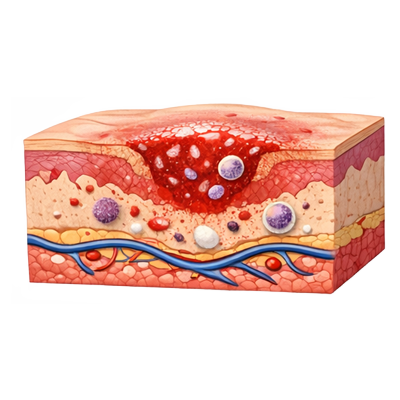
1. Hemostasis

1. Hemostasis

Right after an injury, the body works to stop bleeding. Blood clots begin to form and create a protective seal over the wound.

Direction Arrows
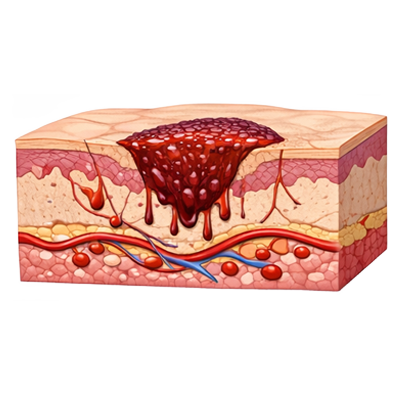
2. Inflammation

2. Inflammation

The body then sends immune cells to the injured area to remove debris and reduce the risk of infection. During this stage, the skin may look red, swollen, or tender.
Direction Arrows
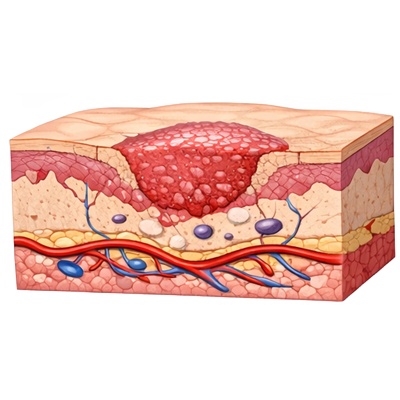
3. Proliferation

3. Proliferation

New tissue begins to form. The body produces collagen, new blood vessels, and other building blocks to close and rebuild the wound.
Direction Arrows
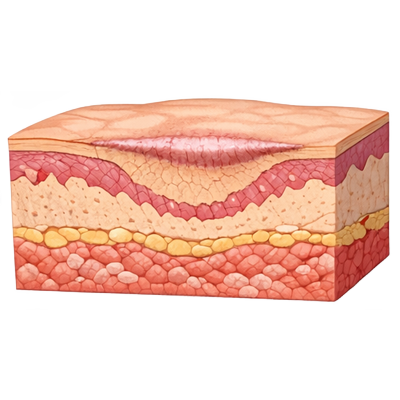
4. Remodeling

4. Remodeling

Once the wound is closed, the skin continues to reorganize and strengthen the repaired tissue. This stage can continue for months, which is why scars often change over time in texture, color, and thickness.This final remodeling stage plays a major role in how visible a scar becomes.

Why Collagen Changes Scar Appearance?

Collagen is one of the main structural proteins in the skin, and it plays a central role in wound repair. When the skin is injured, the body produces collagen quickly to close the damaged area.
However, the collagen laid down during healing is not arranged in the same way as it is in healthy, uninjured skin. Instead of the organized structure found in normal skin, the repaired tissue may form in a denser or less uniform pattern.

Over time, the body continues remodeling this collagen, which is why many scars gradually become softer and less visible. Still, the final appearance depends on how the skin heals and how the scar is managed after wound closure.

Why Do Some Scars Become More Noticeable?Several factors can influence how a scar develops:

Factors
Explanations
Depth and size of the wound
Deeper or larger wounds are more likely to leave noticeable scars.
Wound location
Areas under frequent movement or tension, such as joints, shoulders, chest, or abdomen, may heal with more visible scarring.
Skin type and genetics
Some people naturally form thicker or more raised scars.
Inflammation or infection
If a wound becomes irritated or infected, the healing process can be disrupted.
Sun exposure
New scars are especially sensitive to UV exposure and may darken more easily.
Moisture balance and aftercare
A healthy healing environment can support better skin recovery.

Why Early Care Matters After Wound Closure?

Once the wound is fully closed, scar care becomes an important part of skin recovery. This stage is when the scar is still developing, and the tissue continues to remodel over time.

It is important to note that scar care should begin only after the wound has fully closed and there is no active drainage, open skin, or infection. Starting too early may interfere with healing.
Consistent care during the early scar phase can make a meaningful difference, especially for people with post-surgical scars or areas prone to tension, rubbing, or repeated adhesive use.

Supporting the Scar Healing Process

Scar healing is not immediate. Even after a wound looks closed on the surface, the skin may continue remodeling for several months. During this time, it is important to care for the area gently and consistently.

If a scar becomes increasingly raised, painful, itchy, or extends beyond the original wound area, it may be helpful to seek professional advice.

Final Thoughts

Scars form because the skin is doing what it is designed to do — repair and protect. But the way a scar looks and feels can vary depending on the injury, the healing process, collagen remodeling, and the care given after wound closure.
By understanding what causes scars, how scars form, and the key stages of the scar healing process, patients and caregivers can take a more informed approach to supporting skin recovery.

Explore Rystora scar care solutions designed to support skin recovery after wound closure.

Scroll to Top